
Last updated July 15, 2026
Air Duct Cleaning Maintenance Checklist for Allentown Homeowners
Most duct cleaning checklists floating around online were written for generic climates — none of them account for Allentown’s humidity swings between July and January, which create condensation conditions inside metal ductwork that accelerate mold and dust adhesion faster than in drier markets. After 17 years of focused duct work in the Lehigh Valley, we’ve learned that a maintenance checklist isn’t just a reminder schedule — it’s a diagnostic tool that tells you whether your system is performing between professional cleanings or silently accumulating the conditions that drive up your next job’s cost and complexity. This guide — alongside our Complete Guide to Air Duct Cleaning in Allentown — gives homeowners observable, non-technical signals they can track without any specialized tools.
Quick Answer
Allentown homeowners should inspect supply and return registers monthly for dust color changes and airflow reduction, replace filters every 60 days during Lehigh Valley pollen season and peak heating months, and schedule professional Air Duct Cleaning services every 3–5 years — or sooner if musty odors, visible debris, or allergy spikes appear. Track airflow balance across rooms and document conditions before and after any professional service to establish a baseline for future comparison.
Table of Contents
- Why Allentown’s Climate Changes Everything
- Monthly Visual Checks: No Tools Needed
- Seasonal Filter Timing for the Lehigh Valley
- Tracking Airflow Balance as an Early Warning System
- Documenting Before and After: Building Your Baseline
- Red Flags: When to Call a Professional Now
- Annual Deep Maintenance Checklist
- Common Mistakes to Avoid
- When to Call a Professional
- Frequently Asked Questions
- The Bottom Line
Why Allentown’s Climate Changes Everything
Allentown sits in a humidity trap that most homeowners underestimate. The Lehigh Valley’s position between Blue Mountain and South Mountain creates a bowl effect where moisture lingers, especially during summer months when relative humidity regularly pushes past 70%. That moisture doesn’t stay outside — it infiltrates your duct system every time your air handler cycles.
Here’s what happens inside Allentown homes that doesn’t happen in Phoenix or Denver: warm, humid summer air hits the cooler metal surfaces of your ductwork, causing condensation. That thin film of water captures dust particles that would otherwise pass through, cementing them to duct walls. By October, when heating season starts, those bonded deposits get baked and compressed. Come spring, they’re stubborn, layered buildup that requires more aggressive cleaning than the loose surface dust found in drier climates.
Winter brings the opposite problem. Allentown’s sustained heating load from November through March keeps ducts dry but creates static pressure issues. Forced-air systems running 16–18 hours daily during cold snaps move enormous volumes of air. Filters clog faster. Seals dry and crack. The thermal expansion and contraction of metal ductwork in unconditioned spaces like attics and crawl spaces loosens connections that were tight in September.
We’ve seen this pattern repeat across Allentown neighborhoods from West End to East Side, from the historic homes near Cedar Beach Park to newer construction in the suburbs. The specific humidity signature of the Lehigh Valley means your maintenance checklist needs to be more vigilant than the generic 90-day advice you’ll find on filter packaging.
Monthly Visual Checks: No Tools Needed
You don’t need a borescope or airflow meter to catch early warning signs. These five checks take under ten minutes and reveal more than most homeowners realize:
- Remove and inspect one supply register cover. Look at the dust accumulation on the backside of the grille and the first few inches of visible duct. Healthy systems show a thin, uniform gray coating. Concerning signs: clumped or stringy debris, dark discoloration, or a greasy film that smears when touched.
- Check return air grilles. Returns pull air from your living space, so they collect what floats — pet hair, skin cells, cooking particulates. In Allentown’s older homes, especially those near Center City with original plaster and lath, we’ve seen returns clogged with decades of fine plaster dust that homeowners mistook for ordinary household dust.
- Compare dust color across rooms. Uniform light gray is normal. Darker dust in specific rooms suggests localized problems — a bedroom with black streaks might indicate a failing flex duct connection in the attic above, pulling in insulation fibers or rodent debris.
- Look for moisture marks. Any water staining, rust spots, or mineral deposits on metal register edges signal condensation issues inside the duct. In Allentown’s humid summers, this is your earliest mold warning.
- Sniff test at startup. When your system first cycles after being off for several hours, note any musty, earthy, or chemical odors. A brief dusty smell is normal; anything lingering beyond two minutes warrants investigation.
Document what you find with phone photos. Date them. Over six months, you’ll build a visual history that reveals patterns no single inspection can show.
Seasonal Filter Timing for the Lehigh Valley
The “change every 90 days” advice on filter packaging wasn’t written for Allentown’s pollen calendar or heating demands. Here’s what 17 years of focused duct work has taught us about actual replacement intervals in the Lehigh Valley:
- March 15 – May 30: Every 30–45 days. Tree pollen peaks in late April, grass pollen follows. Allentown’s mix of oak, maple, and birch creates some of the highest pollen counts in Pennsylvania. A filter that looks clean in April is often packed with microscopic grains that restrict airflow without visible surface loading.
- June 15 – August 31: Every 60 days. Summer humidity keeps particles sticky and filters load differently — less visible dust, more embedded grime. If you run air conditioning consistently, check monthly regardless.
- September 15 – November 15: Every 45 days. Ragweed season overlaps with early heating startup. This transition period is when we see the most filter-related service calls in Allentown — homeowners who forgot to change filters before firing furnaces for the first time.
- December 1 – February 28: Every 30–60 days depending on system runtime. During sustained cold snaps when your furnace runs 18+ hours daily, filters load faster than any other period. Homes in older Allentown neighborhoods with original ductwork and less insulation see the highest runtime.
We specify Aprilaire and Honeywell filtration products because their MERV ratings are independently verified — we’ve tested enough off-brand filters that collapse or bypass to know the difference matters, especially during Allentown’s heavy pollen and heating seasons.
Tracking Airflow Balance as an Early Warning System
Uneven temperatures across rooms aren’t just a comfort issue — they’re diagnostic data. A room that used to heat evenly but now runs 4–5 degrees cooler suggests restricted airflow, disconnected ductwork, or a failing damper.
Here’s a simple tracking method any Allentown homeowner can use:
- Establish your baseline. On a moderate day with your system running steadily, use any thermometer to record temperatures in the center of each room, away from registers and exterior walls. Do this at the same time of day — we recommend 7 PM when most homes have stable internal loads.
- Check monthly. A variance of 2–3 degrees between rooms is normal in two-story homes. Variance growing beyond 4 degrees, or appearing suddenly in a previously balanced room, signals investigation.
- Feel the register airflow. Hold your hand 12 inches below supply registers. Strong, consistent flow should reach that distance. Flow that barely drifts past the grille, or that varies dramatically between rooms of similar size, indicates duct restriction or leakage.
- Listen for whistling or roaring. New airflow noises often mean a blockage has forced air through smaller openings, or that a duct section has disconnected entirely and air is escaping into wall or floor cavities.
In Allentown’s row home neighborhoods — the classic brick twins and quads from Fountain Hill to Hanover Heights — we’ve found that decades of minor settling cause duct connections to separate in basement ceiling runs. Homeowners notice it first as a bedroom that “never gets warm anymore,” not as a duct problem.
Documenting Before and After: Building Your Baseline
Professional duct cleaning transforms your system, but without documentation, you can’t measure that transformation or judge when the next cleaning is due. Here’s what to record:
Before your cleaning:
- Photos of register interiors and visible duct openings
- Your monthly airflow balance readings (temperatures and subjective flow strength)
- Filter condition at removal — photo and date
- Any odors, allergy symptoms, or dust accumulation complaints from household members
- Your system’s age, duct material (sheet metal, flex, fiberboard), and any known modification history
After your cleaning:
- Photos of the same register and duct locations
- Technician’s notes on what was removed (estimated volume, debris type, any anomalies)
- Before/after airflow measurements if your provider offers them — we record static pressure and register flow on every Air Duct Cleaning in Allentown job
- Recommended next service interval based on your specific system condition and household factors
This documentation becomes your personal benchmark. When we return to Allentown homes we’ve serviced, the homeowners with baselines can tell us exactly when conditions degraded — “The bedroom started running cold again in January” or “The musty smell came back after Memorial Day.” That precision saves diagnostic time and ensures we address root causes, not symptoms.
Red Flags: When to Call a Professional Now
Some checklist items don’t wait for your next scheduled cleaning. These four conditions indicate active problems that worsen daily:
- Persistent musty odor after system startup. In Allentown’s climate, this almost always means moisture accumulation with microbial growth. The smell that fades after a few minutes is typically surface dust burning off; a musty odor that lingers or returns with each cycle suggests mold colonies inside ductwork or on the evaporator coil. This is beyond DIY treatment — improper cleaning disperses spores throughout your home.
- Visible debris at supply registers. If you can see particles blowing out, the debris load inside is substantial. More critically, it suggests the debris isn’t adhered to duct walls — it’s loose and mobile, which often means a section of duct has collapsed or disconnected, creating a debris reservoir that’s being drawn into your living space.
- Unexplained allergy or respiratory symptom spikes. When multiple household members develop symptoms simultaneously, especially after system startup or when moving between floors, your ducts are the common denominator. We’ve traced sudden allergy flare-ups in Allentown homes to rodent infestations in attic ducts, mold behind registers, or deteriorating flex duct that’s releasing fiberglass particles.
- Water stains or rust on register faces. This indicates active condensation inside the duct, creating conditions for mold and structural deterioration of metal ductwork. In Allentown’s humidity, water problems accelerate quickly — we’ve seen minor condensation lead to significant rust-through in single seasons.
Annual Deep Maintenance Checklist
Once yearly — we recommend September, before heating season and after the worst summer humidity — perform this comprehensive review:
- Inspect the air handler cabinet. Look for dust accumulation on the blower wheel, moisture in the drain pan, and integrity of the filter rack seal. A filter that doesn’t seat properly bypasses unfiltered air directly into your ducts.
- Check condensate drainage. Allentown’s humid summers strain drainage systems. A clogged line backs moisture into the cabinet and, potentially, into downstream ductwork. Pour a cup of water into the drain pan and confirm it flows freely to the exterior termination.
- Examine exposed ductwork in basement, attic, and crawl space. Look for disconnected joints, crushed flex sections, and deteriorating tape or mastic seals. In unconditioned spaces, check for insulation damage from moisture, pests, or physical compression.
- Verify return air pathway integrity. Many Allentown homes, especially pre-1950 construction, use wall cavities or joist bays as return channels. These are impossible to clean effectively without specialized equipment and are common locations for hidden mold and debris accumulation.
- Test and record system static pressure if your thermostat provides it, or request measurement during professional service. Rising static pressure across years indicates progressive duct restriction from buildup or filter issues.
- Schedule professional HVAC Cleaning in Allentown if the evaporator coil, blower assembly, or cabinet show significant debris — these components affect duct cleanliness even when ducts themselves are clean.
We use Abatement Technologies air scrubbers and HEPA containment during annual deep cleanings to protect your home’s air quality during the service itself — a precaution many generalist HVAC companies skip.
Common Mistakes to Avoid
- Buying the highest MERV filter available. Allentown homeowners often install MERV 13+ filters in systems designed for MERV 8. The restricted airflow increases static pressure, strains the blower motor, and can actually reduce filtration efficiency as air bypasses around the filter edges. Match filter rating to your system’s specifications — we verify this on every service call.
- Ignoring the dryer vent. A clogged dryer vent creates backpressure that can force lint into shared duct spaces or, in worst cases, create fire hazards. In Allentown’s older homes with original dryer vent routing through crawl spaces or long horizontal runs, lint accumulation is often severe. Dryer Vent Cleaning in Allentown should be part of your annual maintenance, not an afterthought.
- Using register deodorizers or “duct cleaning” sprays. These products mask odors without addressing causes and often leave sticky residues that accelerate future dust accumulation. We’ve removed pounds of accumulated debris that started with a homeowner spraying “fresh linen” scent into their registers.
- Sealing registers in unused rooms. Closing registers seems logical but increases system static pressure, forces air leaks at duct joints, and can cause the evaporator coil to freeze in cooling mode or the heat exchanger to overheat. Balance airflow with dampers at the trunk line, not register closures.
- Skipping professional cleaning after renovation. Allentown’s active historic home market means constant renovation. Drywall dust, sawdust, and construction debris overwhelm residential filtration and embed permanently in ductwork if not professionally removed promptly. We recommend cleaning within 30 days of substantial renovation completion.
- Assuming new construction is clean. New Allentown-area homes often have the dirtiest ducts we encounter — construction debris sits in ducts for months before occupancy, compressed by the first heating season into stubborn deposits. Pre-occupancy cleaning is the most effective service you’ll ever schedule.
- Waiting for visible dust at registers. By the time debris reaches visible supply registers, the internal duct load is severe. The earliest signs are subtle — slight airflow reduction, faint odors, incremental filter loading. Train yourself to notice these precursors.
When to Call a Professional
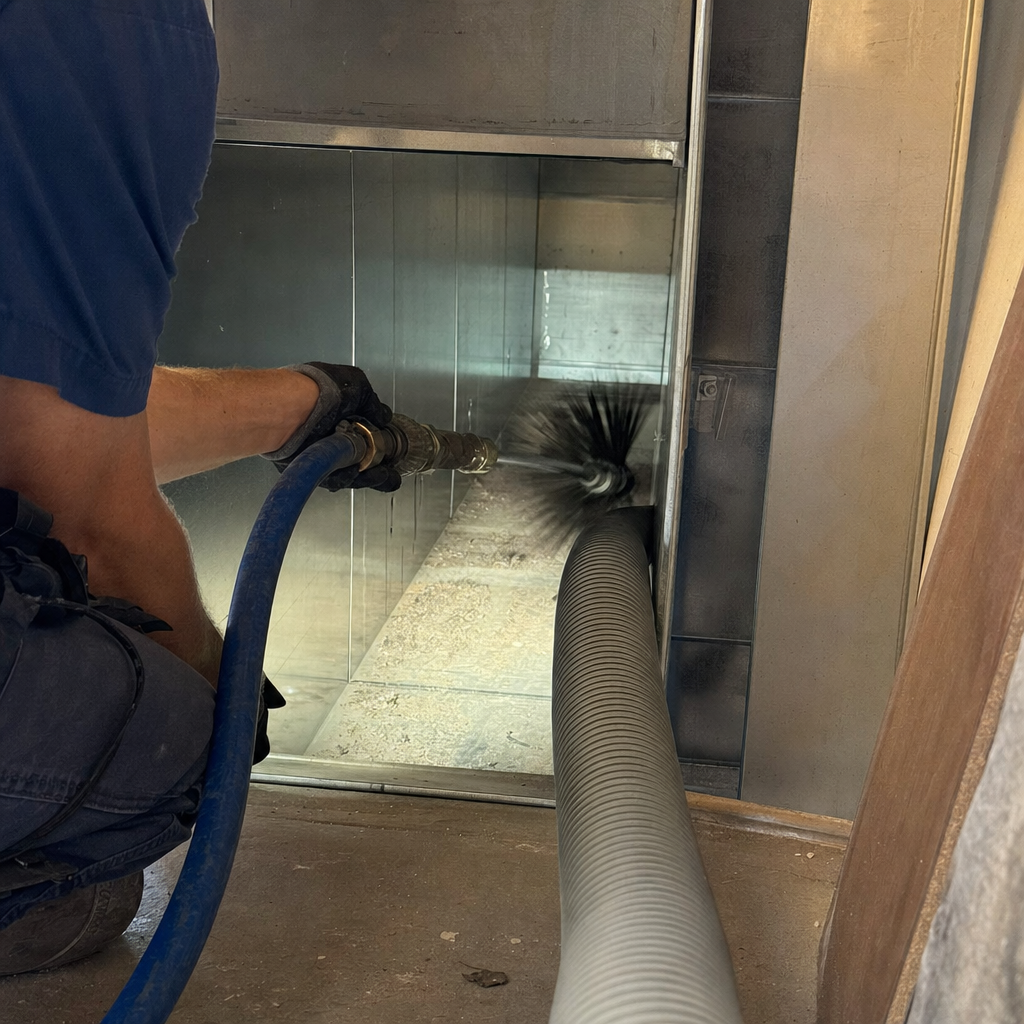
Call when red flags appear, when your documentation shows degrading trends, or when it’s been more than five years since your last professional cleaning — sooner if you have pets, allergy-sensitive household members, or recent renovation. Larry shows up personally as Lead Technician on every Sequoia Air Duct & Vent Cleaning Greater Allentown home job, bringing 17 years of focused duct work and professional-grade Rotobrush and Nikro equipment to diagnose conditions that homeowner checklists can’t reach.
Sequoia Air Duct & Vent Cleaning Greater Allentown offers free estimates in Allentown — call (888) 398-0831. We’ll review your documentation, inspect your system with borescope cameras where accessible, and recommend service intervals based on your actual conditions, not generic schedules.
Frequently Asked Questions
Most Allentown homes need professional duct cleaning every 3–5 years, though homes with pets, allergy-sensitive residents, or recent renovation may need service every 2–3 years. Allentown’s humidity and heating load accelerate buildup compared to drier climates, so we assess each home individually rather than applying universal intervals. See Air Duct Cleaning Permits, Codes & Inspections in PA: What You Need to Know for regulatory requirements. Call (888) 398-0831 for a free estimate and personalized recommendation based on your system condition.
A shop vacuum can remove loose surface debris at registers but cannot reach the full duct network or generate sufficient negative pressure to extract adhered buildup. More critically, improper DIY cleaning disturbs debris without containing it, potentially increasing airborne particulates in your living space. For comprehensive cleaning that addresses Allentown’s humidity-compacted deposits, professional equipment with HEPA containment is necessary.
Musty odors at startup typically indicate microbial growth on the evaporator coil, in the drain pan, or on duct surfaces where Allentown’s summer humidity has created condensation. The odor concentrates while the system is off and distributes when airflow resumes. This condition worsens without treatment and can affect indoor air quality significantly — schedule inspection if the smell persists beyond two minutes or returns with each cycle.
Residential duct cleaning in Allentown typically ranges from $400–$800 for average-sized homes, with pricing varying by system size, duct accessibility, and contamination level. Homes with multiple HVAC zones, extensive flex duct in crawl spaces, or remediation-grade conditions (mold, rodent debris) fall at the higher end. We provide exact quotes after inspection — call (888) 398-0831 for a free estimate with no obligation.
Moderate duct buildup rarely causes measurable efficiency loss; severely restricted ducts can increase blower workload and reduce effective system capacity. The primary energy benefit comes from identifying and sealing leaks during professional service — conditioned air escaping into attics or crawl spaces represents direct energy waste. Our duct repair and sealing services address these losses comprehensively.
Duct cleaning addresses the supply and return duct network; HVAC cleaning includes the air handler components — blower wheel, evaporator coil, heat exchanger, and cabinet. These components interact continuously — a clean duct system with a contaminated coil recirculates debris immediately. For complete system hygiene, we recommend both services, which Sequoia handles in one visit without subcontracting.
The Bottom Line
A maintenance checklist for duct cleaning isn’t a calendar reminder — it’s a diagnostic discipline. Allentown’s specific climate demands more vigilance than generic advice provides: monthly visual checks for moisture and debris changes, filter timing calibrated to Lehigh Valley pollen and heating cycles, airflow tracking that catches duct problems before they become comfort crises, and documentation that turns each professional service into a benchmark for the next. The homeowners who maintain this discipline get more value from every cleaning, extend intervals appropriately, and catch serious problems while they’re still manageable. Those who wait for visible dust at registers or musty odors that won’t fade are already facing more complex, more expensive remediation. Explore our more guides & resources to stay ahead of duct problems.
Written by Larry Peterson, Owner & Lead Technician at Sequoia Air Duct & Vent Cleaning Greater Allentown, serving Allentown since 2009.