
Fast, Reliable Duct Repair & Sealing Across Reading
Duct repair and sealing in Reading typically costs between $275 and $650 for most residential jobs, with same-day service available throughout the city. We’re based in Allentown and regularly make the run down Route 222 to Reading — usually arriving within 45 minutes to an hour for calls in the 19601, 19602, 19611, and 19612 ZIP codes. If your utility bills have climbed, rooms stay stubbornly hot or cold, or you’re catching dust plumes from registers, your duct system is likely leaking conditioned air into walls and chases where it does nobody any good.
Reading’s housing stock isn’t like the suburbs. The dense urban core — blocks of pre-1940 brick row homes originally built for coal heat — presents duct configurations you won’t find in newer cities. When HVAC conversions happened in the 1970s and 1980s, installers threaded sheet-metal runs through closets, floor cavities, and party-wall chases never designed for air distribution. That retrofit work is now forty to fifty years old. Joints have loosened, mastic has dried and cracked, and many runs pass through the same brick chases that once vented coal and oil boilers. Our Duct Repair & Sealing team knows these systems because we’ve been inside hundreds of them. Larry Peterson, our owner and lead technician, has spent 17 years focused exclusively on air duct work — not as a side service, but as the only thing we do.
Why Sequoia Air Duct & Vent Cleaning Greater Allentown Is Reading’s Preferred Duct Repair & Sealing Company
We’ve earned 756 verified reviews averaging 4.8 stars across platforms, and a significant share of those come from repeat customers in Berks County who initially found us skeptical that an Allentown-based company would understand Reading’s quirks. They call back because we do. Larry shows up personally as Lead Technician on every job — the same person who answers your questions on the phone is the one crawling through your basement with a flashlight.
Our response time to Reading is consistently under an hour for standard calls, and we carry the inventory to handle most repairs without ordering parts. That matters in row homes where a single leaky duct run can pressurize a party wall cavity and force conditioned air into your neighbor’s space — or draw their cooking odors and combustion byproducts into yours. We know the difference between a standard suburban trunk-and-branch system and the snaking, non-standard configurations common in the 100 blocks of North 4th Street, Washington Street, and the Centre Park historic district.
Our equipment fleet includes Rotobrush contact-vacuum systems, Nikro HEPA-rated extractors, and Abatement Technologies air scrubbers — the same remediation-grade tools we use on commercial jobs in Allentown, deployed here because Reading’s retrofit ductwork demands containment protocols that consumer-grade shop vacs can’t provide.
Our Duct Repair & Sealing Services in Reading
Duct Sealing
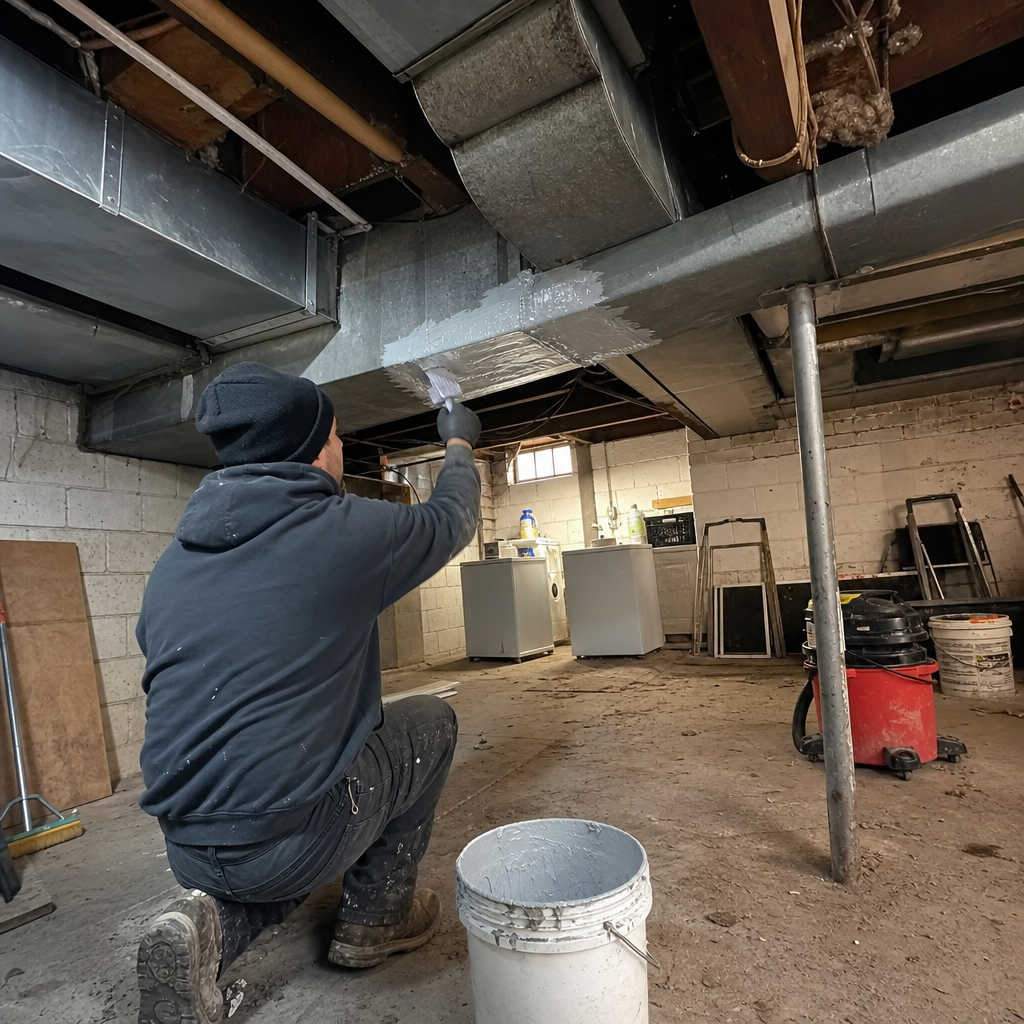
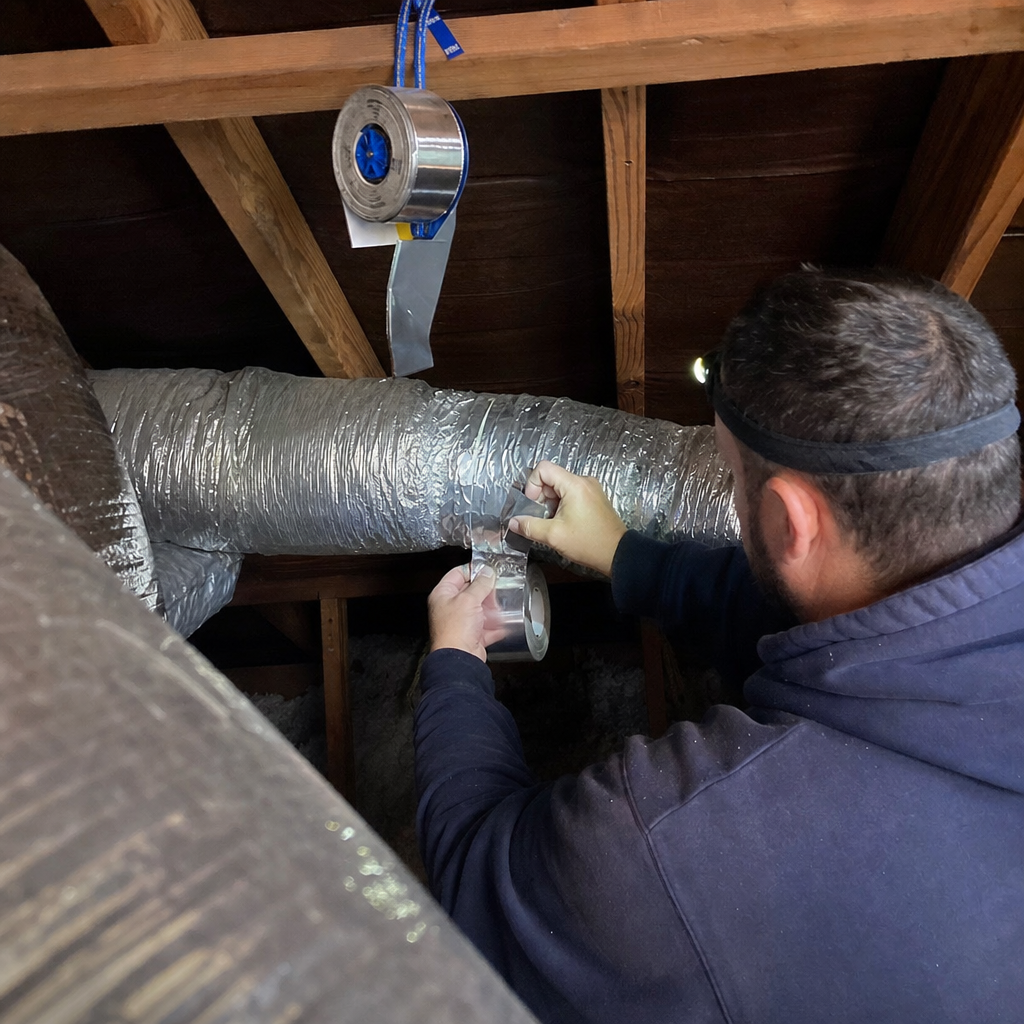
Sealing is the foundation of everything we do in Reading. Most retrofit duct systems in the 19601 and 19602 ZIP codes lose 25–35% of conditioned air to leaks before it reaches the registers. We pressurize the system, locate leaks with smoke pencils and thermal imaging, then seal joints and seams with mastic sealant or foil-backed tape rated for the application. In Reading’s older row homes, we pay special attention to connections where metal runs pass through masonry chases — these thermal bridges expand and contract differently than the duct metal, cracking conventional seals within a few seasons.
Metal Duct Repair
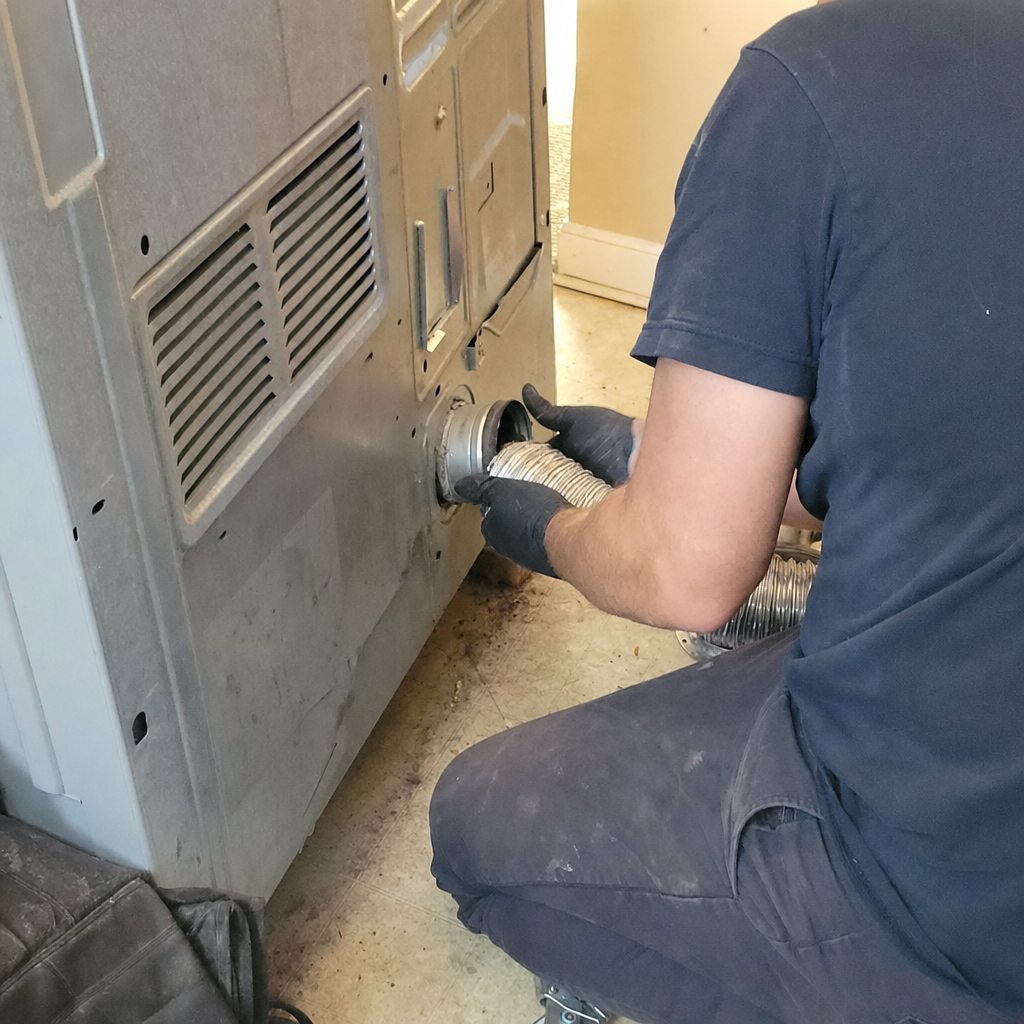
Galvanized sheet metal from the 1970s and 1980s doesn’t last forever, especially in Reading’s humid river-valley climate. We see rust-through at low points where condensate collects, separated seams at supports that have shifted, and impact damage where ducts were run through tight chases with inadequate clearance. Our metal duct repair includes patching, section replacement, and custom fabrication for non-standard dimensions common in retrofit work. On a row home in the 100 block of North 4th Street, we found a metal duct run snaking through a converted coal chute in the party wall. The galvanized passages were coated in iron oxide flakes and decades of oil residue. We sealed all joints with mastic and wrapped the exposed run in fiberglass insulation, restoring airflow and preventing future moisture condensation.
Flex Duct Repair
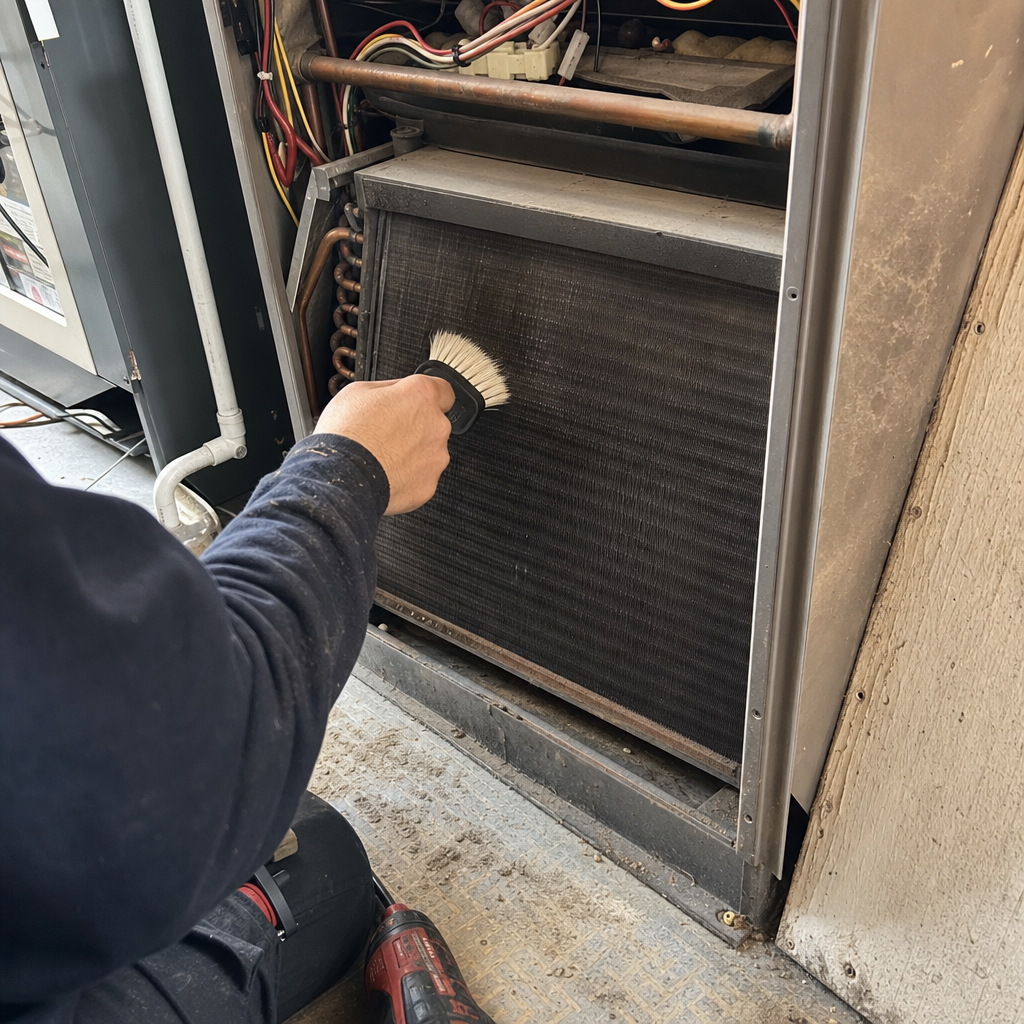
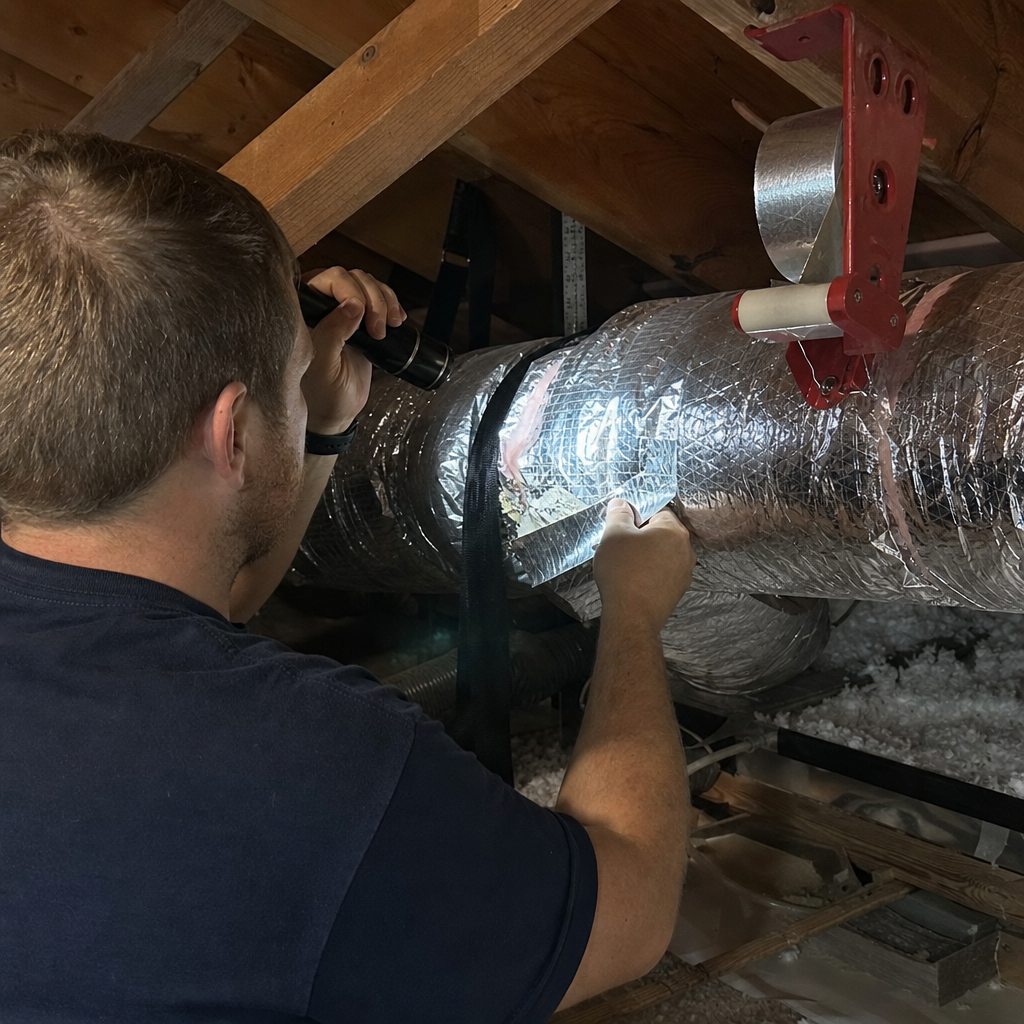
Flex duct appears in Reading’s outer neighborhoods — the 1950s ranch and split-level homes in ZIPs like 19608 and 19610 — and in attic retrofits throughout the city. Sagging, kinked, or crushed flex is common where installers worked with inadequate clearance or where insulation has compressed over decades. We replace damaged sections with properly supported new flex, sized to match the original CFM design, and we never bury connections in insulation where they can’t be inspected.
Duct Insulation
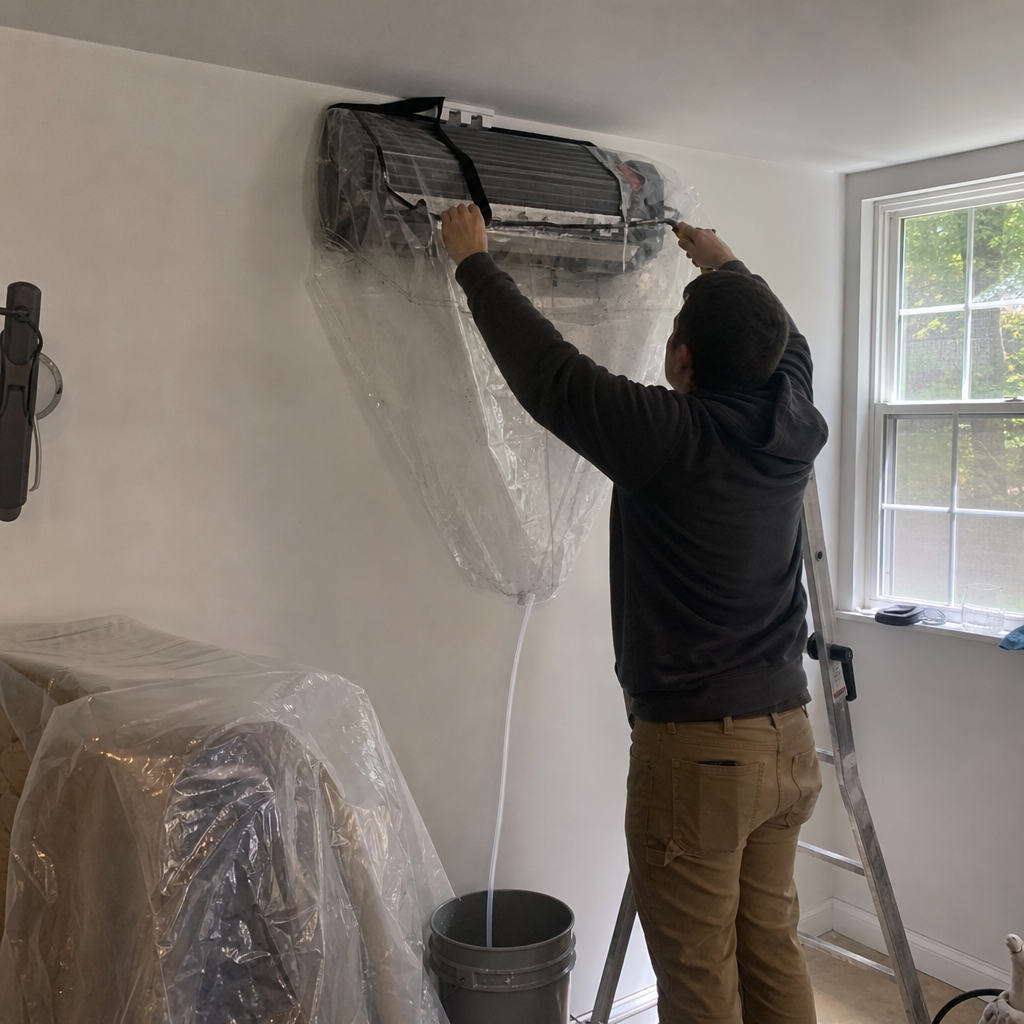
Reading’s summer humidity — amplified by the bowl-shaped Schuylkill valley that traps moisture against Blue Mountain and South Mountain — makes uninsulated or poorly insulated ductwork a mold risk. Condensation forms on cool supply runs in humid basement and chase environments, saturating surrounding materials and creating conditions for microbial growth. We install fiberglass duct wrap or replace uninsulated sections with pre-insulated duct, always with a proper vapor barrier facing the conditioned air stream.
Mastic Sealant Application
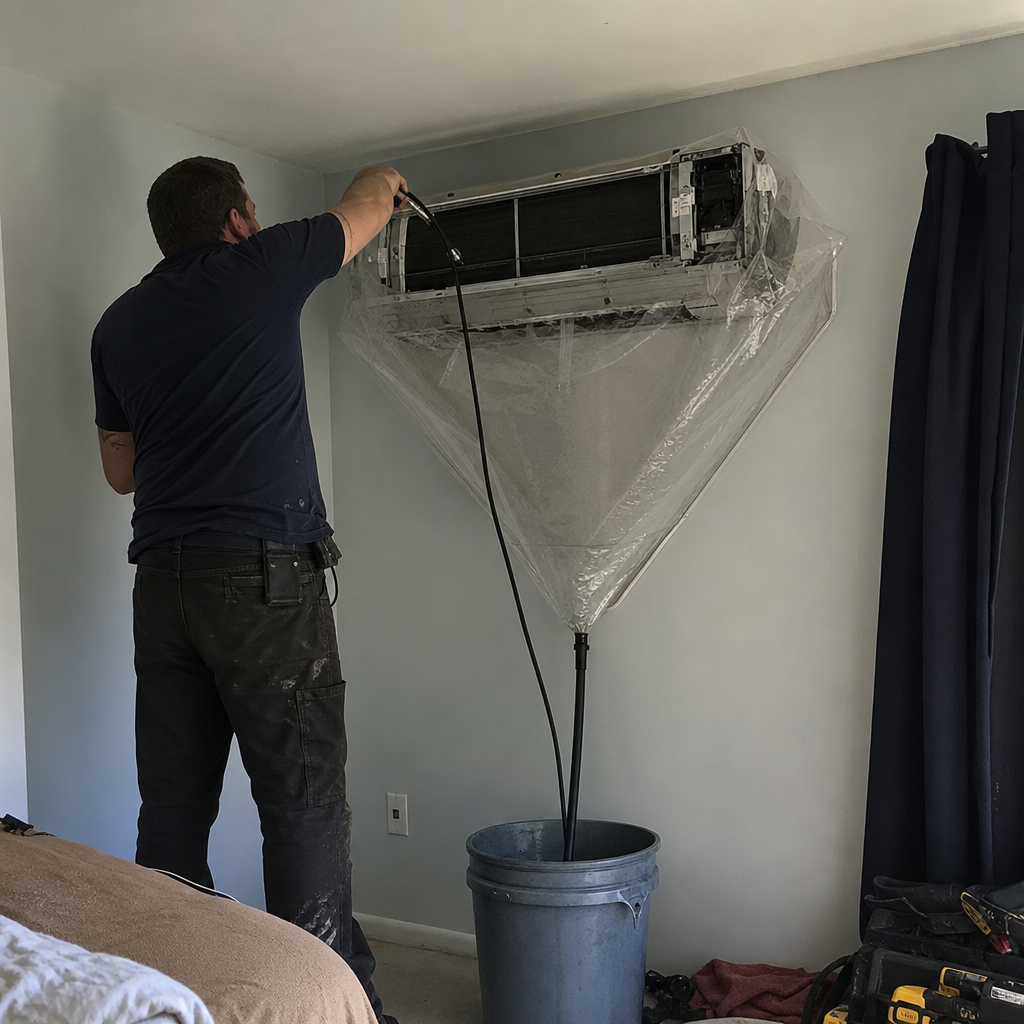
Mastic is our preferred sealant for Reading’s older metal ductwork — it remains flexible, fills irregular gaps better than tape alone, and adheres to surfaces that foil tapes struggle with. We apply it with brushes and caulking tools to ensure complete coverage at joints, takeoffs, and penetrations. For damp or oily surfaces in pre-1940 row homes, we prep with degreasing agents and mechanical abrasion so the mastic achieves proper adhesion — skipping this step is a common shortcut that leads to recurring leaks within a season or two.
Air Leak Repair
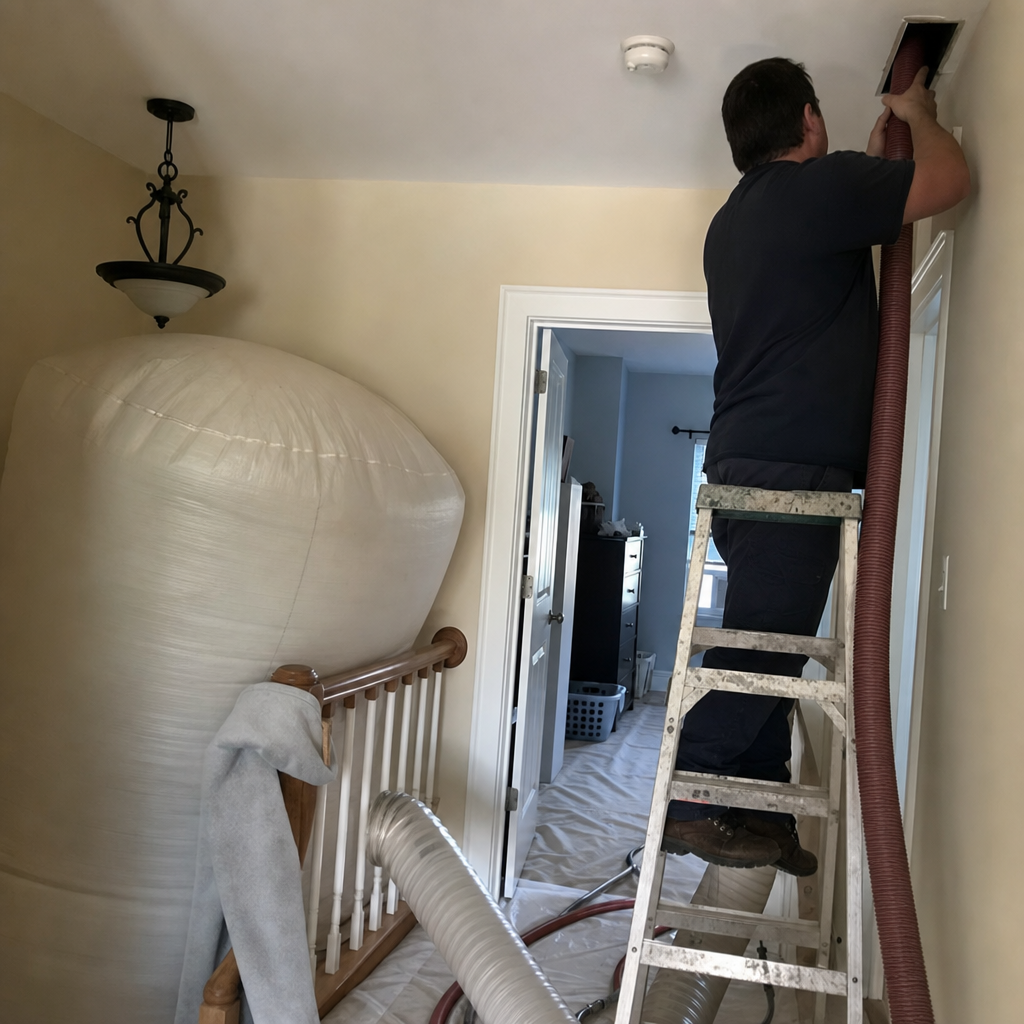
Some leaks aren’t at joints — they’re in the building envelope itself, where ducts penetrate walls, floors, or chimneys. In Reading’s row homes, we regularly find supply boots pulled away from plaster ceilings, return plenums drawing air from wall cavities instead of conditioned space, and panned floor joists that have separated from their framing. We repair these with sheet metal, mastic, and mechanical fasteners, then verify with pressure testing.
What happens when you call
- 1
A real person answersNo phone trees — you reach a local pro.
- 2
You get an upfront price rangeHonest numbers before anyone is dispatched.
- 3
A background-checked tech heads outLicensed & insured, dispatched right away.
- 4
You approve before work beginsNothing starts until you say go.
Trusted Brands We Service in Reading
We stock parts and materials from Honeywell, Aprilaire, and Abatement Technologies — brands that property managers and discerning homeowners already recognize for air quality applications. For Reading customers, this means we can often complete repairs in a single visit without waiting on supply-house orders. Our Guardsman line of access panels and dampers covers the odd sizes common in retrofit installations. When we encounter an Aprilaire or Honeywell whole-house humidifier or air cleaner integrated with a duct system, we service it as part of the repair scope — no need to call a separate contractor.
Common Duct Repair & Sealing Problems We See in Reading Homes
- Layered soot and rust in coal-chase ductwork. Technicians working Reading’s older rowhome blocks regularly discover that duct runs were threaded through the same brick chases that once vented coal and oil boilers — these passages retain layered soot and iron oxide dust that standard rotary brush protocols stir up rather than remove, making proper containment and HEPA vacuuming non-negotiable on almost every job in the 19601 and 19602 ZIP codes.
- Mastic adhesion failure on oily surfaces. Using standard mastic on damp or oily duct surfaces in pre-1940 row homes leads to adhesion failure and recurring leaks. We see this repeatedly on DIY or cut-rate jobs where the prep work was skipped — the mastic skins over but never bonds, peeling away within months.
- Flex duct kinking in tight attic spaces. Sealing leaks in flex duct without first supporting sagging runs causes kinks that restrict airflow. In Reading’s older homes with shallow attics or scuttle access, installers often ran flex with inadequate support spacing, and gravity has done its work over decades.
- Pressure imbalances from party-wall leaks. A single disconnected joint in a row home’s party-wall chase can pressurize the cavity, forcing conditioned air into neighboring units and drawing unconditioned return air through gaps in the envelope. The symptoms — uneven temperatures, high bills, and mysterious drafts — often get misdiagnosed as equipment problems.
Pricing for Duct Repair & Sealing in Reading, PA
Most residential duct sealing jobs in Reading run $275–$450 for a standard row home or small single-family, with metal duct repair ranging $350–$650 depending on access difficulty and material extent. Full duct insulation for a typical Reading basement or chase system falls between $400 and $800. Flex duct section replacement is usually $180–$340 per run.
What moves the needle: access difficulty (crawl spaces and sealed chases take longer), the extent of contamination requiring pre-cleaning, and whether we find non-standard dimensions needing custom fabrication. We always provide upfront pricing before work begins — call (888) 398-0831 for a free estimate with no obligation.
| Service | Typical Range in Reading |
|---|---|
| Duct sealing (standard residential) | $275 – $450 |
| Metal duct repair | $350 – $650 |
| Flex duct section replacement | $180 – $340 per run |
| Duct insulation (basement/chase) | $400 – $800 |
| Mastic sealant application (full system) | $300 – $500 |
We Also Serve Cities Near Reading
Our service radius extends throughout Berks County and into neighboring communities. We regularly handle duct repair and sealing in Wyomissing (where 1950s–1970s homes present different challenges than Reading’s urban core), Shillington, Blandon, and Birdsboro. Each community has its own housing character — from Wyomissing’s mid-century splits to Birdsboro’s mixed-era stock — and we adjust our approach accordingly. Call (888) 398-0831 to confirm coverage for your address.
Serving Reading, PA — Our Local Coverage Area
We’re based in the Reading area and know this community well. Use the map below to see our service coverage — if you’re nearby, we can almost certainly help.
FAQs — Duct Repair & Sealing in Reading
Mastic remains flexible after curing, bridges irregular gaps in retrofit joints, and adheres to surfaces that foil tapes can’t grip properly. In Reading’s pre-1940 row homes, duct joints are often uneven, oily, or thermally stressed from passing through masonry chases — conditions where tape alone fails within a season. We prep surfaces thoroughly and apply mastic in generous coats that accommodate movement. Call (888) 398-0831 to schedule an inspection — estimates are free.
Yes, we usually recommend it. Reading’s valley geography traps humidity against the surrounding mountains, and summer dew points regularly push duct surfaces below condensation temperature. Sealed but uninsulated metal in a cool basement or chase will sweat, creating moisture problems that undermine the repair. We typically quote insulation as part of the sealing scope for Reading jobs. Call (888) 398-0831 for a combined estimate.
Galvanized metal rusts through at low points where condensate collects; support hangers corrode and let runs sag; takeoff collars separate from trunks due to thermal cycling; and flex duct connections dry-rot where they penetrate hot attic spaces. The non-standard dimensions of retrofit work mean replacement parts often need custom fabrication rather than off-the-shelf fittings. Call (888) 398-0831 — we carry the tools and stock to handle most Reading configurations in one visit.
We work through existing access points — removed register grilles, basement ceiling openings, and carefully cut inspection ports in plaster or drywall that we restore afterward. For the coal-chase runs common in 19601 and 19602, we sometimes need to open small sections of wall or ceiling to reach damaged sections, but we minimize intrusion and always discuss the approach before cutting. Call (888) 398-0831 to talk through access options for your specific layout.
Yes, typically by 15–25% in Reading’s retrofit systems where leakage runs 25–35% of total airflow. The savings are often more pronounced in row homes because party-wall leaks don’t just waste energy — they create pressure imbalances that draw unconditioned air through the envelope, forcing your HVAC to work harder. After sealing, customers in Reading’s Centre Park and North 4th Street areas regularly report more even temperatures and lower summer cooling costs. Call (888) 398-0831 for a pressure test and estimate — there’s no charge to find out what you’re losing.
Ready to stop throwing conditioned air into your walls? Call Sequoia Air Duct & Vent Cleaning Greater Allentown at (888) 398-0831 for free estimate on duct repair and sealing in Reading. Larry Peterson handles every job personally, and we’ll give you honest answers about what your system needs — no more, no less.
Written by Larry Peterson, Owner at Sequoia Air Duct & Vent Cleaning Greater Allentown, serving Reading and the greater Allentown area since 2007.