
Fast, Reliable HVAC Cleaning Across Reading
HVAC cleaning in Reading typically runs $280–$650 for a full system service, and most appointments are completed in a single visit. We travel to Reading from our Allentown base with the full Rotobrush and Nikro HEPA fleet loaded, so you’re not waiting on a subcontractor to borrow equipment. Whether you’re in the brick rowhomes near 5th and Penn or out on the acreage past Route 222 in the 19608 ZIP, Larry Peterson shows up personally as Lead Technician. Call (888) 398-0831 for a free estimate — we can usually book you within 48 hours.
Reading’s housing stock tells a story you won’t find in suburban Allentown or Bethlehem. The densely packed urban core — ZIPs 19601 through 19604 — is dominated by pre-1940 brick row homes originally built for coal or oil boiler heat with radiator systems, not forced-air ductwork. When owners converted to central HVAC in the 1970s and 1980s, installers had to retrofit sheet-metal duct runs through closets, floor cavities, and between-unit party-wall chases. These non-standard configurations accumulate decades of layered soot, rust flakes from galvanized passages, and combustion residue that purpose-built suburban systems never see. This conversion-era ductwork is the defining challenge of HVAC cleaning in Reading and sets it apart from newer-build cities nearby.
But this page is for the other Reading — the one we spend just as much time in. Out past the city line, in the rural outer ZIPs like 19608, properties often include detached workshops with oversized roll-up doors and heavy-duty residential openers, where duct runs to woodstoves or secondary HVAC units accumulate coarse sawdust and spring grease that standard commercial cleaning tools miss. These homeowners don’t call twice. They want it handled in one trip, thoroughly, by someone who understands that a workshop HVAC system is working harder and dirtier than the house unit ever will.
Why Sequoia Air Duct & Vent Cleaning Greater Allentown Is Reading’s Preferred HVAC Cleaning Company
We’ve been driving the Route 222 corridor to Reading for 17 years, and our HVAC Cleaning team knows the difference between a 19601 rowhome chase and a 19608 workshop conversion before we unload the van. Larry Peterson built this business on showing up personally as Lead Technician — the same person who earned nearly 800 verified reviews averaging 4.8 stars is the one crawling your attic or workshop ceiling. No rotating crews, no handoffs.
That consistency matters to Reading customers. We’ve cleaned systems in Wyomissing split-levels, Shillington ranches, and Blandon farm properties — enough volume that 756 verified reviews back our claims with documented outcomes. Property managers in the 19602 corridor call us repeatedly because we document every job with before-and-after photos and don’t subcontract the sealing or sanitizing phase to a separate contractor.
Our response time to Reading averages same-day or next-day for standard bookings, with emergency slots available for blower motor failures or coil freeze-ups during humidity spikes. We load the full equipment fleet for every Reading trip — Rotobrush contact-vacuum systems, Nikro HEPA-rated units, Abatement Technologies air scrubbers — because we don’t know what we’ll find until we open the access panel, and we don’t make two trips.
Our HVAC Cleaning Services in Reading
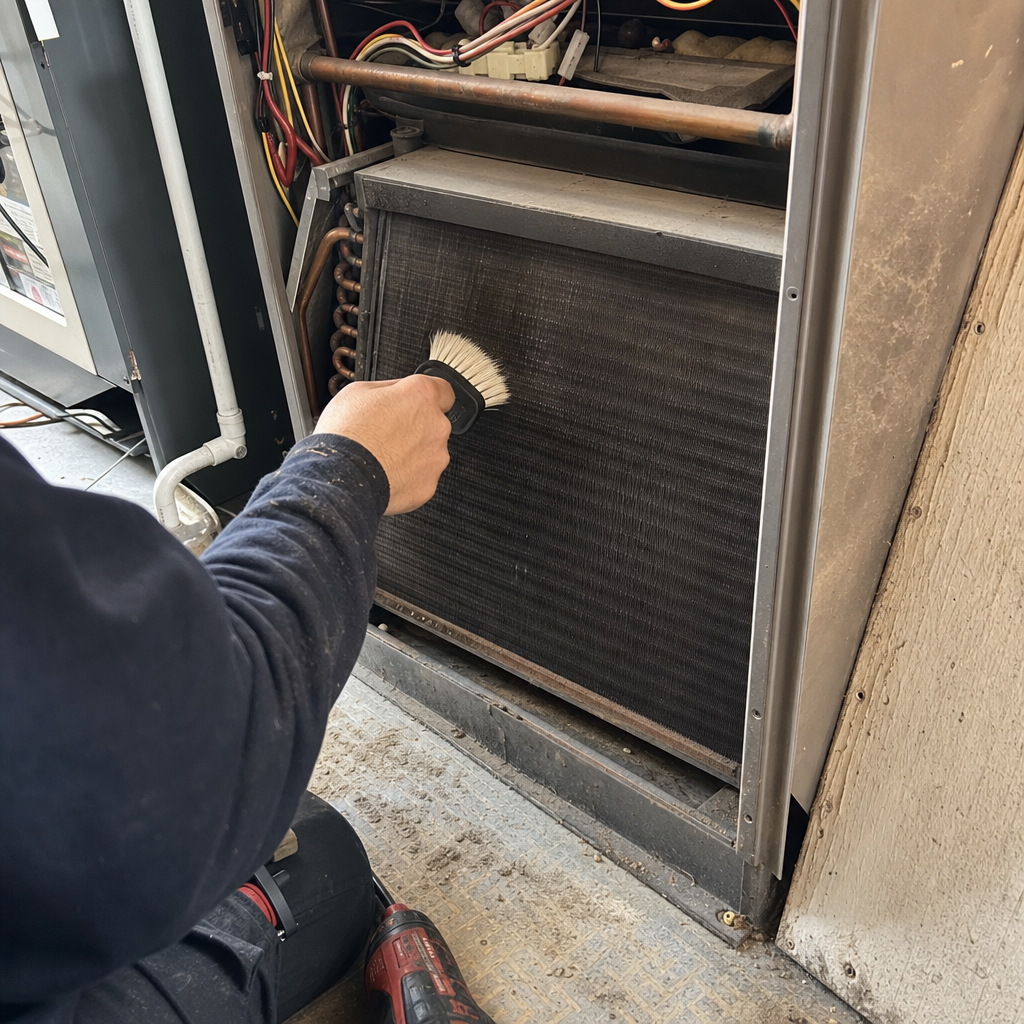
Evaporator Coil Cleaning
The evaporator coil is where Reading’s humidity problem becomes visible. Sitting in a bowl-shaped section of the Schuylkill River valley, Reading traps particulate matter during temperature inversions and pushes summer humidity higher than surrounding hilltop communities. That humidity condenses on dirty coils, creating a biofilm that reduces airflow and breeds odor. In 19608 workshop units, we’ve found coils coated with fine sawdust that acts like a sponge, holding moisture against the aluminum fins until corrosion sets in. We clean with foaming degreaser and low-pressure rinse, then apply Guardsman coil protectant where corrosion risk is elevated. A typical evaporator coil cleaning in Reading runs $180–$320.
Blower Cleaning
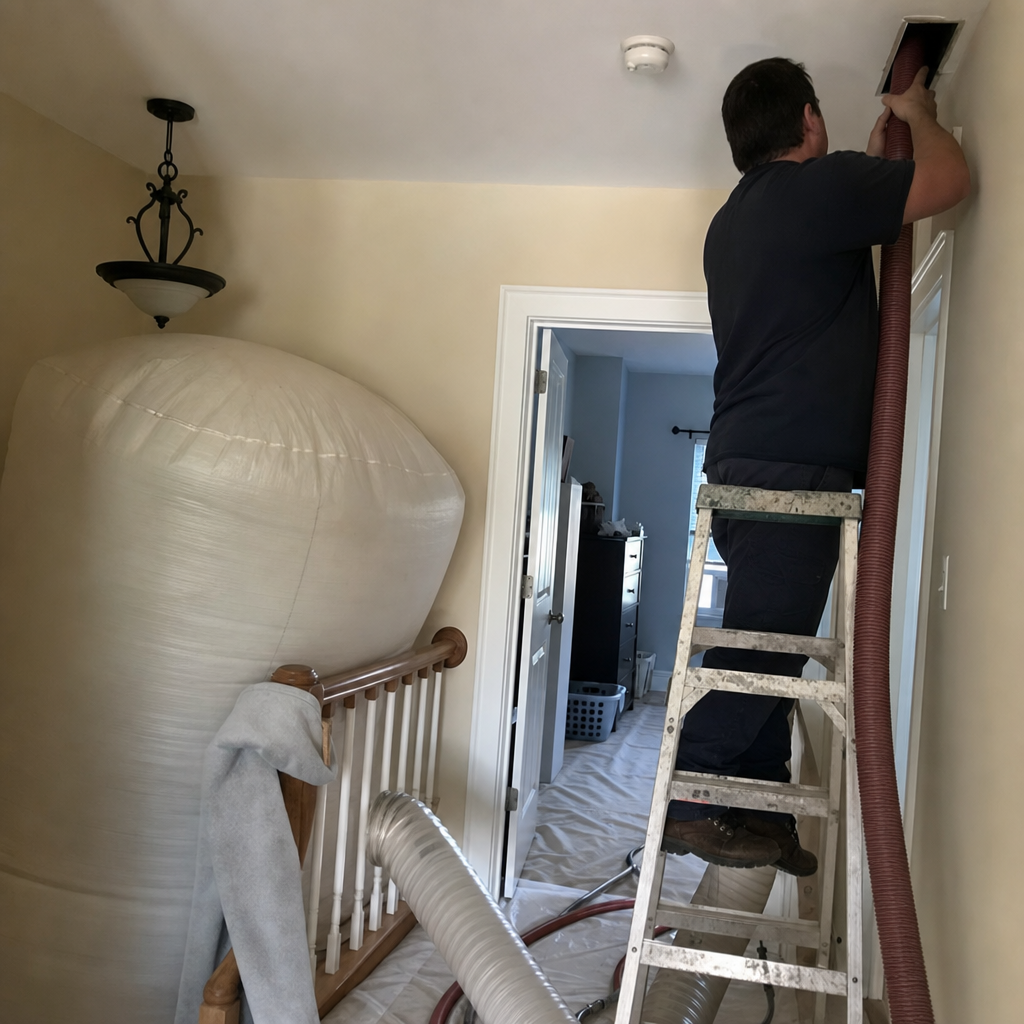
The blower wheel moves every cubic foot of air your system handles, and in Reading’s older rowhomes, that air carries rust flakes from galvanized retrofit ductwork and legacy combustion residue. In workshop units, it’s moving sawdust, metal shavings, and spring grease aerosolized by the heavy-duty door mechanisms nearby. A dirty blower loses 15–30% of its designed airflow, which you’ll feel as weak vents and higher energy bills. We remove the blower assembly, clean the wheel and housing with contact vacuums, and balance the reassembly. Blower cleaning in Reading typically costs $150–$280.
Condenser Cleaning
Reading’s valley location means summer air sits heavy and particulate-laden. Outdoor condenser coils load with pollen, road dust from Route 222 and 422 traffic, and agricultural debris from the surrounding Berks County farmland. We use foaming cleaner and fin combs, checking for damage from winter ice or lawn equipment. Condenser cleaning runs $120–$220 in the Reading market, often paired with evaporator service for a complete seasonal prep.
Air Handler Cleaning
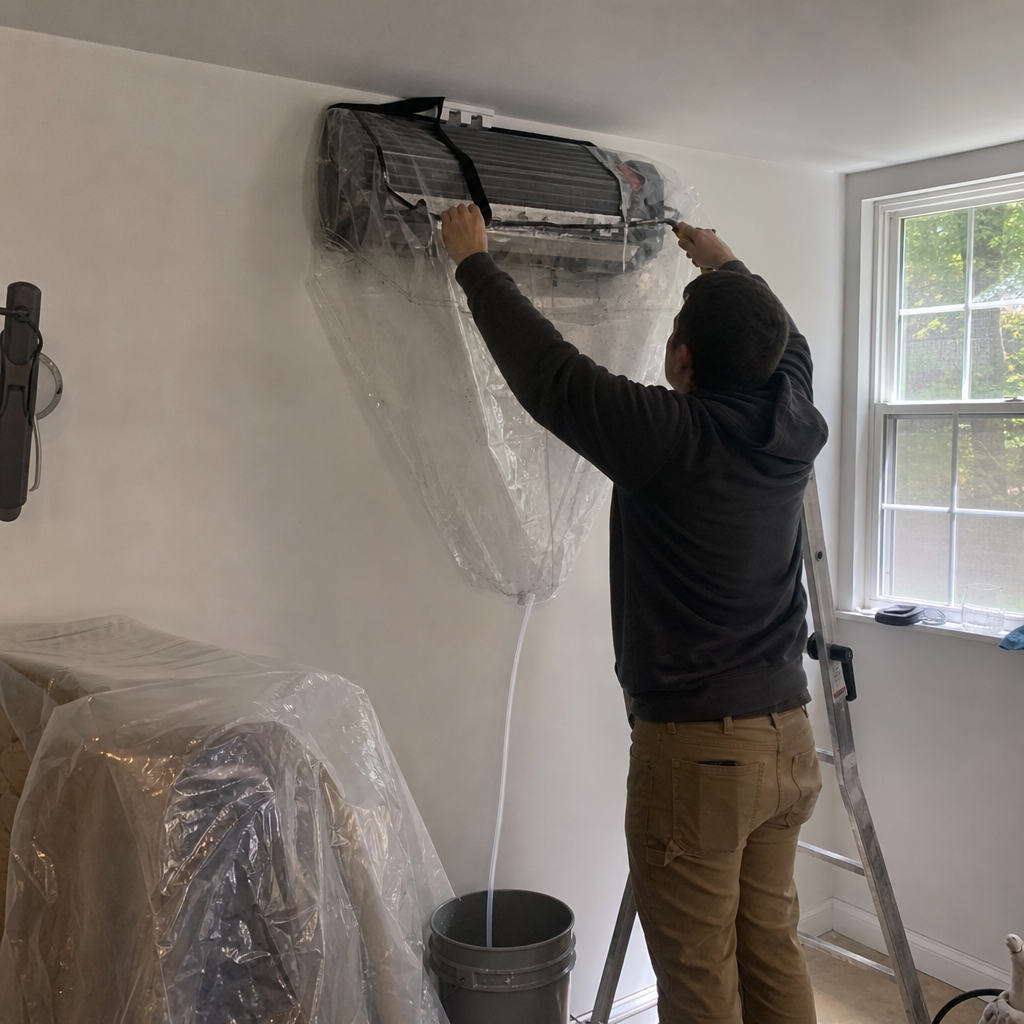
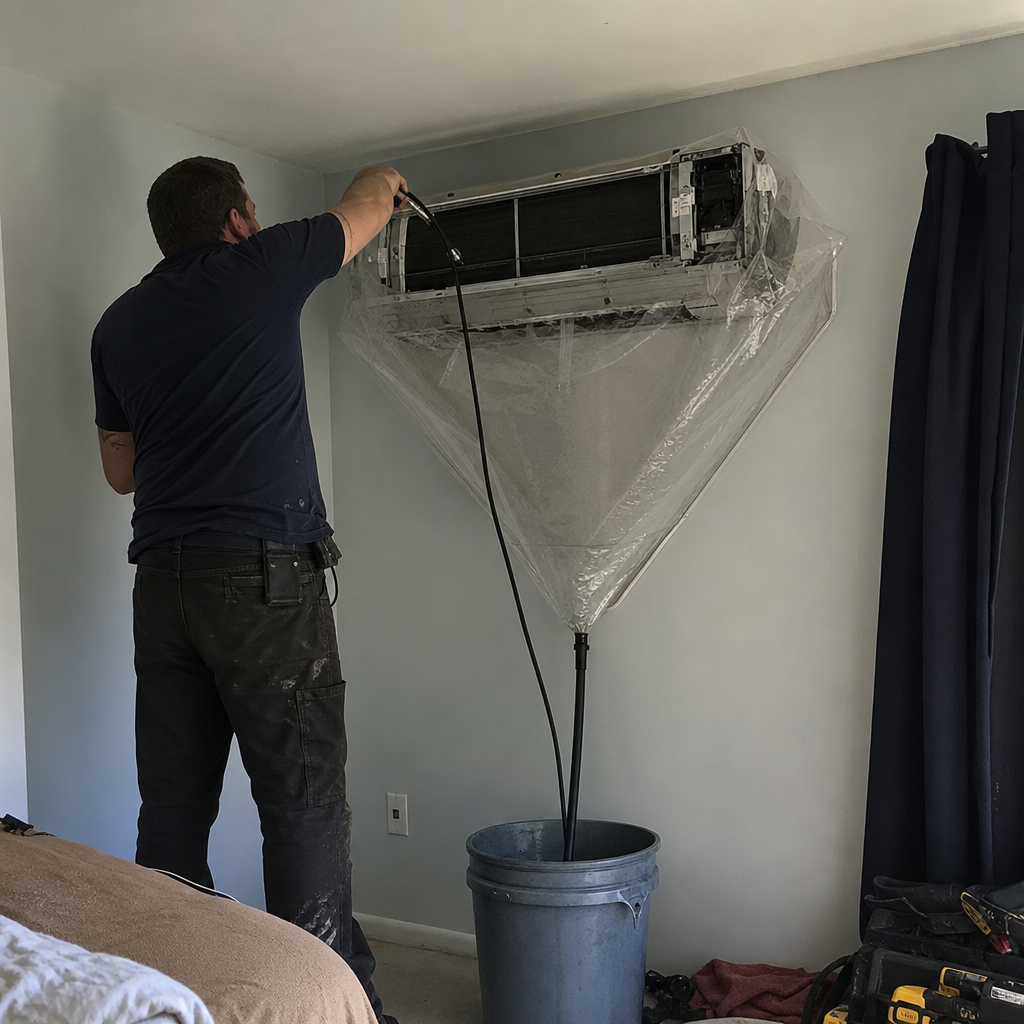
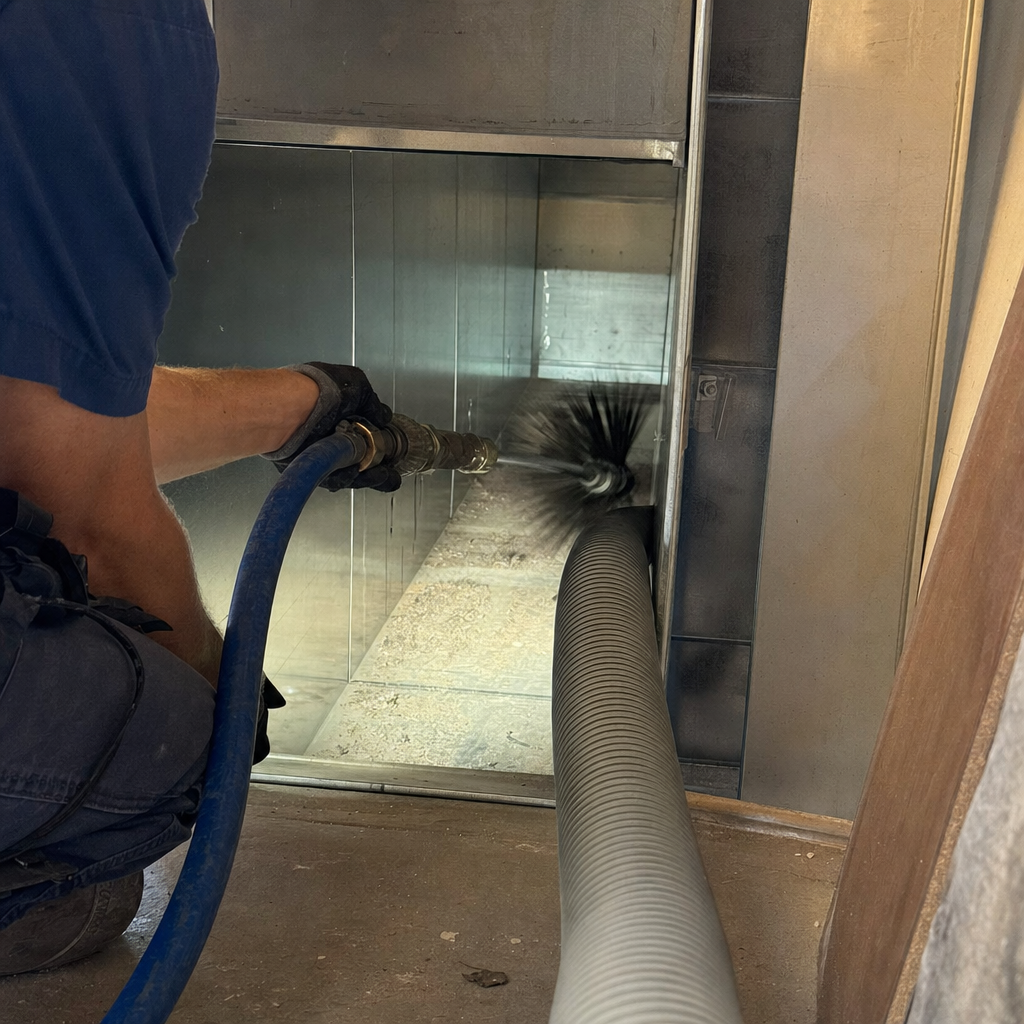
The air handler is the central station — cabinet, coils, blower, and drain pan in one housing. In Reading’s converted rowhome systems, air handlers are often squeezed into former coal cellars or closet retrofits with minimal access, making thorough cleaning a specialist job. In 19608 workshop installations, they’re frequently mounted overhead to save floor space, which means working at height with proper containment. We clean the full cabinet interior, treat the drain pan for algae and mold, and verify float switch operation. Air handler cleaning in Reading ranges from $240–$420 depending on access difficulty and system size.
Coil Treatment
After cleaning, we apply Guardsman coil protectant to slow future buildup — critical in Reading’s humidity and essential in workshops where airborne debris never stops. This treatment extends the interval between deep cleanings and protects the fin surface from the acidic byproducts of organic growth. Coil treatment as an add-on runs $60–$110, or bundled with evaporator cleaning at reduced rate.
What happens when you call
- 1
A real person answersNo phone trees — you reach a local pro.
- 2
You get an upfront price rangeHonest numbers before anyone is dispatched.
- 3
A background-checked tech heads outLicensed & insured, dispatched right away.
- 4
You approve before work beginsNothing starts until you say go.
Trusted Brands We Service in Reading
We maintain familiarity with the full range of equipment found in Reading homes and workshops — from Aprilaire and Honeywell media filters and humidistats to the Abatement Technologies HEPA systems we deploy on every job. We don’t sell equipment we wouldn’t install in our own shop, and we stock common replacement parts for faster turnaround on Reading calls. If your workshop unit runs a specialized blower or coil configuration, Larry’s 17 years of focused duct work means he’s likely seen it before — in a Birdsboro barn conversion, a Shillington ranch, or a Blandon acreage property just like yours.
Common HVAC Cleaning Problems We See in Reading Homes
- Layered soot in converted rowhome chases. Technicians working Reading’s older blocks regularly discover duct runs threaded through brick chases that once vented coal and oil boilers. These passages retain layered soot and iron oxide dust that standard rotary brush protocols stir up rather than remove, making proper containment and HEPA vacuuming non-negotiable on almost every job in the 19601 and 19602 ZIP codes.
- Workshop debris overwhelming standard equipment. Ignoring the heavy-duty opener mechanism and springs in detached workshops means missing lubricant residue and coarse debris that standard brushes can’t capture, leading to mechanical binding and odor recontamination that returns within weeks.
- Inadequate containment on long workshop drives. Using light-duty containment on long or multi-branch duct runs fails to handle the higher debris load from acreage dust and shop particles, spreading contamination instead of removing it. Our Nikro HEPA units are rated for remediation-grade extraction — we bring them because Reading workshops demand them.
- Humidity-driven mold in unsealed ductwork. Reading’s trapped valley humidity creates recurring mold risk inside duct systems that lack proper sealing or vapor control, especially in crawlspace and cellar installations common in pre-war housing stock.
Pricing for HVAC Cleaning in Reading, PA
| Service | Typical Range in Reading |
|---|---|
| Evaporator Coil Cleaning | $180–$320 |
| Blower Cleaning | $150–$280 |
| Condenser Cleaning | $120–$220 |
| Air Handler Cleaning (full) | $240–$420 |
| Coil Treatment (add-on) | $60–$110 |
| Complete HVAC Cleaning Package | $280–$650 |
What moves you within these ranges? Access difficulty is the big one — a rowhome air handler behind a 1940s closet retrofit takes longer than a basement installation in a 1970s ranch. System size matters too: a 5-ton workshop unit has more coil surface and blower mass than a 2-ton city house system. Contamination level affects time on site — first cleanings after decades of deferred maintenance run longer than maintenance cleans. We quote upfront after inspection, and estimates are free. Call (888) 398-0831 for exact pricing on your Reading system.
We Also Serve Cities Near Reading
Our service radius extends throughout Berks County and western Lehigh, including Wyomissing, Shillington, Blandon, and Birdsboro. Each community shares Reading’s valley humidity but brings its own housing character — from Wyomissing’s mid-century developments to Birdsboro’s rural acreages with workshop buildings similar to those we specialize in across the 19608 ZIP. Same equipment, same owner-led crew, same single-trip thoroughness.
Serving Reading, PA — Our Local Coverage Area
We’re based in the Reading area and know this community well. Use the map below to see our service coverage — if you’re nearby, we can almost certainly help.
FAQs — HVAC Cleaning in Reading
Workshop ductwork handles coarse debris — sawdust, metal shavings, spring grease — that residential systems rarely see, and the HVAC units are often overhead-mounted with limited access. We serviced a 19608 detached workshop with a 12-foot roll-up door and a Rotobrush system that hadn’t been cleaned since installation. The homeowner, a woodworker, complained of stale odor when using the propane heater. Our crew used Nikro HEPA vacs to extract a mix of fine sawdust and dried grease from the heavy-duty springs and drive rails, then treated the coils with Guardsman coil protectant to prevent corrosion from workshop humidity. Call (888) 398-0831 to schedule — estimates are free.
Barn conversions typically have uninsulated or poorly sealed flex duct run through loft spaces, with gaps that pull in hay dust, bird droppings, and exterior humidity. We inspect with borescope cameras, seal accessible leaks with mastic, and clean with HEPA-contained contact vacuums rather than rotary brushes that would tear deteriorating flex duct. The process takes 3–5 hours for a typical 1,200-square-foot workshop. Call (888) 398-0831 for a specific assessment.
We clean the HVAC components — coils, blowers, ductwork — that interact with workshop debris; we do not service the door springs or tracks themselves, as those are mechanical systems outside our scope. However, we document when spring grease contamination is entering your air handler and can recommend qualified door technicians in the Reading area. For the HVAC side, we extract the grease and debris that’s already in your system. Call (888) 398-0831 to discuss what we can handle in one visit.
Acreage properties have more exposed soil, unpaved drives, and agricultural activity that generates airborne particulate. Combine that with workshop operations producing sawdust and combustion byproducts, plus longer duct runs that reduce airflow velocity and let debris settle, and you have a system that loads 40–60% faster than a comparable city installation. Reading’s valley humidity then binds that debris to duct walls, accelerating buildup. We recommend 18–24 month cleaning intervals for rural workshop systems versus 3–5 years for standard residential. Call (888) 398-0831 to set up a maintenance schedule.
We need you to clear the immediate work zone for safety and containment effectiveness, but you don’t need to shut down operations for the full day. Most workshop cleans take 3–4 hours; we coordinate the noisiest blower-vacuum phase during your break or between projects. HEPA containment means minimal dust escape even with the workshop door open. Call (888) 398-0831 to schedule around your workflow — we’ll make it work.
Ready to get your Reading workshop or home HVAC system cleaned right in one trip? Larry Peterson and the Sequoia crew are available for free estimates at (888) 398-0831. We answer directly — no call center, no scheduling service, just the owner who’ll be on your job from start to finish.
Written by Larry Peterson, Owner at Sequoia Air Duct & Vent Cleaning Greater Allentown, serving Reading since 2007.